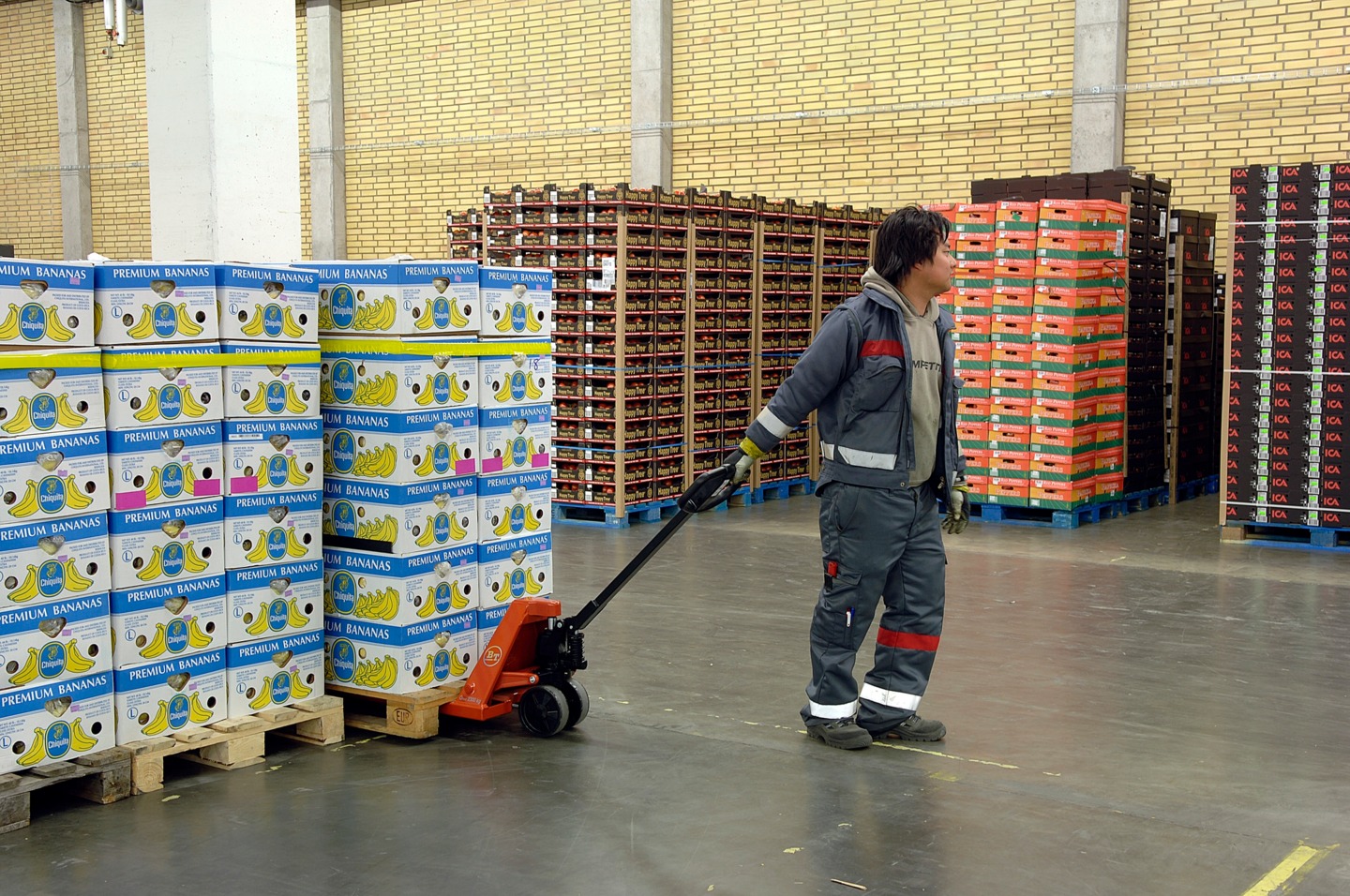
A Powered Pallet is an essential tool for moving palletized loads within warehouses and factories, transforming heavy lifting tasks into straightforward, safe operations. They are available as cost-effective manual hand pallets or high-speed electric Powered Pallets that eliminate operator fatigue. Selecting the right model based on your specific load weight capacities and travel distances will sustainably optimize workflow efficiency and protect staff from workplace injuries.
Moving inventory from one zone to another within a warehouse can easily become one of the most time-consuming and energy-draining tasks if workers have to pull heavy loads all day without the right material handling tools. This operational bottleneck not only drags down daily productivity but also risks the long-term physical health of your operator. The essential tool designed to transform heavy labor into an easy, rapid, and safe workflow is the Powered Pallet—a fundamental piece of equipment that no factory or warehouse can afford to be without.
What is a Powered Pallet and how many types are there?
A Powered Pallet, also known as a hand pallet or pallet jack with automatic, is one of the most essential material handling tools used in warehouses, factories, and distribution centers. It is designed to move palletized loads over short to medium distances using fork arms and a hydraulic lifting system. Powered Pallets improve workplace safety, reduce manual lifting injuries, and increase warehouse efficiency. They are generally divided into two main categories:
1. Hand Pallet
The most commonly used models in warehouses. Operators manually pump the hydraulic handle to lift pallets and use physical force to move loads. They are cost-effective, easy to maintain, and do not require batteries or electricity. However, handling heavy loads over long distances may lead to operator fatigue and reduced productivity.
2. Electric Powered Pallets
Advanced material handling technology engineered explicitly to eliminate worker fatigue by utilizing onboard batteries and electric drive motors to handle travel and lifting tasks. This drastically lowers operator strain while multiplying fulfillment speeds. These are further categorized into:
- Semi-Electric Models: Utilize electric power to lift the pallet but still require manual pushing/pulling, or utilize electric drive motors for travel while relying on a manual hydraulic handle pump to lift.
- Full Electric Models: Both lifting and travel actions are entirely motorized. Operators simply guide the machine effortlessly via an ergonomic handle control head.
What is the difference between an electric Powered Pallet and a hand pallet?
If you are weighing which setup to invest in, comparing their operational performance and overall business value provides a clear picture:
| Comparison | Hand Pallet | Electric Powered Pallet |
| Required Labor | Relies entirely on manual muscle power to pump hydraulics and pull loads. | Utilizes electric motors to handle almost all physical exertion. |
| Speed | Highly variable, depending on worker stamina and physical fatigue. | Consistently fast, handling significantly more cycle runs per hour. |
| Safety | High risk of chronic back strain and acute muscle inflammation. | Outfitted with automatic electronic braking and emergency reverse belly buttons. |
| Maintenance Profile | Exceptionally low; primarily involves routine hydraulic oil inspections. | Moderate; requires basic battery charging discipline and electrical checks. |
| Long-Term Value | Low when measuring overall material throughput volume per hour. | Higher initial purchase price but offers rapid ROI via high productivity. |

How to choose a Powered Pallet that fits your warehouse
To guarantee you secure an agile tool that delivers real floor utility without wasting business capital, keep these vital evaluation metrics in mind:
1. Payload Weights
Audit the absolute maximum weight profiles of your active pallets. Always select a truck with a rated lifting capacity that exceeds your heaviest loads by roughly 10% to 20%. This buffer prevents hydraulic line failures and frame bending from structural overloading, extending the machine's lifespan and avoiding unexpected workplace accidents.
2. Travel Distances
Map out the transport paths inside your facility. If your operators regularly pull loads over travel lengths exceeding 50 meters per trip, you should transition from hand pallet to electric models. This keeps delivery speeds steady and protects employees from extreme exhaustion, directly increasing the total number of pallets moved per shift.
3. Frequency of Use
Evaluate the total operational hours logged per shift. If your material handling workflow runs continuously for over 4 hours a day or involves constant inbound/outbound staging, investing in an electric system will drastically compress your process cycle times. This allows your business to scale up order volumes without needing to hire additional warehouse personnel.
4. Floor Surface Conditions
Assess the smoothness and gradients across your operational zones. For indoor facilities with level, smooth concrete or epoxy floors, polyurethane (PU) wheels are ideal because they run silently and prevent floor scratching. However, if your facility features rough asphalt or steep loading ramps, you must select models with high motor torque ratings and high-durability wheel materials engineered to resist tearing.
Elevating warehouse agility: reducing worker strain and boosting business profits
A truly excellent Powered Pallet is not evaluated by a low price tag alone; it must enable your staff to move inventory safely and at peak speeds. Shifting from traditional hand pallet to motorized systems might look like a steep upfront cost initially, but the investment pays off rapidly through a higher volume of completed material cycles, improved handling precision, and reduced workplace injury claims. If you are sourcing a high-durability factory Powered Pallet built to world-class safety standards and need expert engineering guidance to calculate your project's financial return, Toyota Material Handling Thailand is ready to serve. We provide an extensive line of material handling solutions and stand as a top-tier industry leader offering all types of Distributor of electric forklifts—spanning from ultra-compact powered pallets to high-elevation reach trucks for complex automated layouts. We ensure every single material movement across your factory floor runs at peak efficiency.
Contact our team today for a competitive quote:
- Phone : 02-4949-155
- Email : Info@tmhth.toyota-industries.com
References
- What to consider when buying a powered Powered Pallet?. Retrieved on May 12, 2026, from https://blog.toyota-forklifts.eu/what-to-consider-when-buying-a-powered-pallet-truck
Frequently Asked Questions (FAQs) about Powered Pallets
Q : Does operating an electric Powered Pallet require mandatory employee training?
A : Yes. Even though motorized Powered Pallets are highly intuitive to operate, facilities should always conduct basic safety training covering speed control handles, emergency e-stop procedures, and proper cornering techniques. This prevents tip-overs or crush injuries in tight staging aisles and ensures proper battery charging habits to extend cell lifespans.
Q : What is the core difference between PU and Nylon steer wheels, and which should we select?
A : Polyurethane (PU) wheels are elastic and smooth, meaning they roll quietly and leave no dark scuff marks—making them perfect for indoor epoxy or polished concrete facility floors. Conversely, Nylon wheels are highly rigid and exceptionally tough, delivering high resistance to chemical corrosion and moisture; they are best suited for coarse outdoor concrete or washdown areas.
Q : Can a standard hand pallet safely handle temporary overloads beyond its rated capacity?
A : This is absolutely not recommended. Overloading a hand pallet leads to blown hydraulic seals, fluid leaks, and permanent structural bending of the steel fork tines. To ensure long-term durability and staff safety, always maintain a 10% to 20% weight capacity headroom above your heaviest actual pallets.