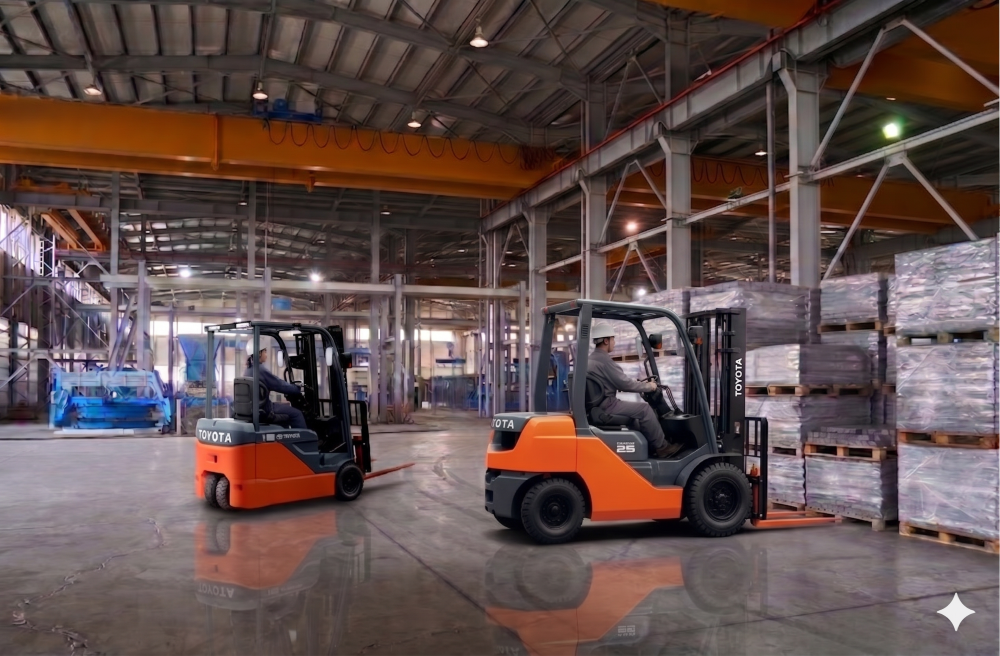
When deciding between Electric VS Diesel forklifts, the core factor is assessing your working environment. Electric forklifts are ideal for indoor warehouses and industries requiring high cleanliness standards, while diesel forklifts perform best in outdoor and rough-terrain applications. Regarding long-term budget management, although electric forklifts have a higher initial investment, they offer lower energy and maintenance costs over time. For SMEs, considering this long-term cost-effectiveness alongside machinery rental services can improve cash flow, enhance operational efficiency, and support sustainable business growth.
Investing a core piece of machinery like a forklift is a key investment that directly impacts your long-term operational efficiency and business costs. A classic question business owners and warehouse managers frequently face is: between an Electric VS Diesel forklift, which system offers the best effectiveness?
As a global leader in both systems, Toyota Material Handling Thailand provides expert insights, comparing the pros and limitations of each system, ensuring you can select the forklift that is the "perfect fit" for your operations. This approach helps improve productivity and optimize warehouse performance.
Electric VS Diesel Forklift: Which is better for indoor operations?
The working environment is the first factor to consider. Electric VS Diesel Forklift: Which Is Better for Indoor Operations? The clearest answer is the "Electric Forklift," due to its distinct operational characteristics:
- No. 1 The Indoor - Electric Forklifts: The key advantage is Zero-Pollution and remarkably low noise levels, making them an indispensable choice for food, beverage, and pharmaceutical manufacturing, or cold storage warehouses that require high cleanliness standards (GMP/HACCP).
- Power The Outdoor - Diesel Forklifts: Designed for heavy-duty ruggedness, enduring dust, moisture, and rough terrain. They are ideal for loading docks, construction material yards, or large outdoor spaces. If diesel forklifts are used indoors, the facility must have an excellent ventilation system to safely manage soot and exhaust fumes.
Electric VS Diesel Forklift: What is the difference in maintenance and cost ?
When looking at long-term cost management. How many wonder about the exact differences in maintenance and costs between electric and diesel forklifts? The distinctions can be clearly summarized as follows:
Energy Costs
- Electric System: The charging cost per operational shift is significantly lower than fuel costs, allowing businesses to keep energy expenses stable and highly predictable.
- Diesel System: Higher fuel costs that are volatile and dependent on the global oil market.
Maintenance
- Diesel Forklifts: Require strict, scheduled engine maintenance, such as replacing engine oil, filters, radiators, and belts.
- Electric Forklifts: Hold a major advantage due to having far fewer moving parts. There is no internal combustion engine or transmission to maintain. Upkeep primarily focuses on motor inspections and battery care (such as topping up distilled water in lead-acid batteries). If utilizing Lithium-ion batteries, the system is essentially maintenance-free, which drastically reduces machine downtime.
Should SMEs Choose an Electric vs diesel forklift ?
For SME businesses, investments must guarantee high ROI and maintain agile cash flow. If you are hesitating on whether an SME should choose an electric or diesel forklift, we recommend evaluating based on these criteria:
Industry/Manufacturing Type
If your business operates a general warehouse, food factory, or packaging facility, an electric forklift is the correct investment to meet future sustainability and cleanliness standards. However, if your business is a steel foundry, lumber yard, or construction supply shop, a diesel forklift will better handle the rugged operational demands.
Operating Hours
If you require heavy, continuous outdoor operations without breaks, refueling with diesel allows the forklift to resume work instantly. However, modern electric forklifts equipped with lithium-ion batteries now support fast charging during breaks, significantly minimizing this limitation.
Budget Management
Diesel forklifts generally have a lower initial investment price, but electric forklifts reach their breakeven point much faster in the long run due to reduced energy and repair costs. Furthermore, Toyota offers comprehensive Forklift Rental solutions, allowing SMEs to utilize premium-quality machinery without requiring a massive lump-sum capital investment.

There is no single best option for every situation—only the best option for your specific operational environment. Whether you choose a modern, eco-friendly electric forklift or a robust, heavy-duty diesel engine system, Toyota Material Handling Thailand is ready to deliver. As a premier distributor of both electric reach trucks and diesel engine forklifts, all our models are equipped with world-class System of Active Stability (SAS) safety technology.
If you are still unsure which model provides the absolute best value for your factory, let our team of expert engineers conduct a free site survey. We are ready to serve as your consultant, helping you analyze your Return on Investment (ROI) and recommending the exact material handling solutions that will save your business the most costs.
Contact us for a quotation today:
- Phone : 02-4949-155
- Email : Info@tmhth.toyota-industries.com
References :
- Electric vs LPG vs diesel: Which forklift power type is the best option for you?. Retrieved on May 8, 2026, from https://blog.toyota-forklifts.co.uk/electric-vs-propane-vs-diesel-which-forklift-type-is-the-best-option-for-you
Frequently Asked Questions (FAQs) about Electric VS Diesel Forklifts
Q : Can electric forklifts lift heavy loads as well as diesel forklifts?
A : Yes, they perform equally well. A common misconception is that electric forklifts lack power. However, modern AC motor technology provides exceptionally high torque, allowing electric forklifts to comfortably lift heavy loads.
Q : Can electric forklifts be operated outdoors?
A : Yes, they can be used for loading goods in outdoor yards with smooth concrete surfaces, as the trucks are manufactured with high-standard dust and water-resistant protection. However, they are not suitable for driving on dirt roads, rough terrain, or during heavy rain. In those environments, a diesel engine truck will meet the rugged demands far more effectively.
Q : If an Industry operates 24 hours a day, is an electric forklift a viable option?
A : Absolutely. You simply need to utilize Lithium-ion batteries. Because they support Fast Charge capabilities, operators can plug the forklift in to accumulate charge during breaks or shift changes for just 15-30 minutes. This ensures the truck has sufficient power to run continuously without the need to physically swap battery blocks.