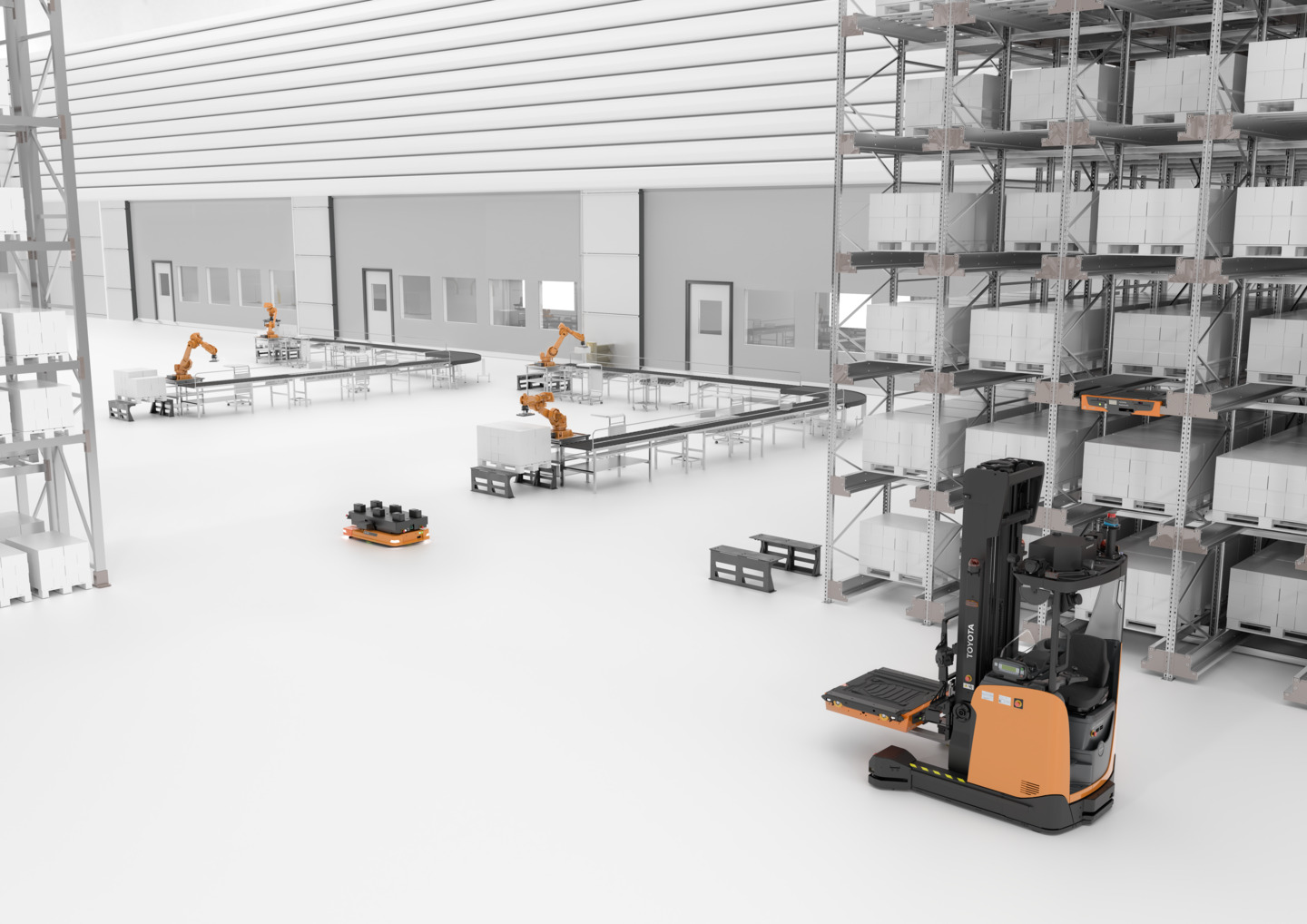
An automated warehouse is a new solution for managing vertical storage space to reduce costs and increase profits. It uses Automated Storage and Retrieval Systems (AS/RS) combined with intelligent software to enhance accuracy, speed, and reduce human errors. This enables businesses to manage limited resources more efficiently in the digital era while supporting scalable growth toward Smart Warehouse and modern logistics transformation.
In business operations, every square meter of warehouse space represents added cost. Expanding horizontally is no longer the most cost-effective solution. Many businesses are now turning to “vertical space,” which is often overlooked, to transform unused air space into value. This approach creates a Modern Era warehouse that reduces costs, improves storage efficiency, and supports faster, more accurate, and more resource-efficient operations, enabling sustainable growth toward Smart Warehouse transformation
What is an automated warehouse?
An automated warehouse is a warehouse management system that integrates cutting-edge technology and machinery to improve efficiency at every stage of fulfillment. It enhances vertical space utilization from inbound receiving, sorting, storage on racking systems, order picking, to outbound transportation. By reducing reliance on manual labor and minimizing human errors, it allows businesses to store more loads within the same space while supporting efficient, scalable Smart Warehouse operations.
Comparing automated warehouses with traditional warehouses
To better understand the differences and business impact, comparing automated warehouses with traditional warehouses demonstrates exactly why transitioning to automation has become a key strategy to strengthen competitiveness in the Modern Era.
| Comparison | Manual Warehouse | Automated Warehouse |
| Accuracy | High likelihood of human error, such as picking incorrect items or misplacing inventory on shelves. | Near 100% precision driven by computerized systems and localized positioning sensors. |
| Operational Speed | Heavily dependent on worker skill levels and staff count. Speed routinely drops as physical fatigue sets in. | Runs at a consistent, high-speed pace and operates continuously 24/7 without downtime. |
| Safety | High risk of incidents, such as forklifts colliding with racking or errors when lifting heavy loads at height. | Exceptionally low risk; machinery works within enclosed cells monitored by intelligent safety guards. |
| Data Management | Relies on manual logs or retroactive data entry, meaning stock levels are frequently outdated. | Data is captured and updated instantly with every movement, enabling real-time stock visibility. |
Warehouse technology in use today
Building a Modern Era warehouse requires more than a single technology. It involves integrating multiple innovations, including automation systems, intelligent software, and connected machinery, to create a seamless operational ecosystem.
1. Automated Storage and Retrieval Systems (AS/RS)
An advanced storage technology that uses intelligent cranes or shuttle systems to automatically store and retrieve loads from high-density racking. It maximizes vertical space utilization, increases warehouse capacity, reduces forklift-related damage, and significantly improves Smart Warehouse efficiency.
2. Automated Transport Vehicles (AGV/AMR)
Autonomous material handling solutions designed to reduce manual labor. AGVs follow predefined routes, while AMRs use sensors and AI to navigate and avoid obstacles independently. Both technologies enhance safety, improve transportation efficiency, and support warehouse automation.
3. Conveyor Systems
Serving as the backbone of automated warehouse operations, enabling the continuous movement of large volumes of loads. It seamlessly connects receiving, sorting, packing, and shipping processes, reducing repetitive handling tasks while improving speed and operational accuracy.
4. Warehouse Management Systems (WMS)
A WMS acts as the central intelligence platform for real-time inventory control. It manages every stage from receiving and storage to order fulfillment and shipping, while integrating with ERP systems for inventory planning and business analytics. This helps reduce picking errors and maximize workforce productivity.

Is an automated warehouse worth the price? Is it the best investment?
Although automated warehouses require a higher initial automated warehouse price than traditional warehouse systems, they provide long-term value by reducing operational costs, increasing efficiency, and delivering sustainable ROI. Key benefits include:
- Lower Labor Costs: ASRS reduces reliance on manual labor, decreasing workforce requirements and minimizing hidden expenses such as overtime pay, employee training, and staff-related benefits, resulting in lower operating costs.
- Reduced Losses and Improved Accuracy: ASRS warehouse systems support FIFO (First In, First Out) and FEFO (First Expired, First Out) inventory management. This helps reduce picking errors, prevent expired stock issues, minimize product loss, and decrease damage caused by improper handling.
- Space Optimization and Lower Construction Costs: By maximizing vertical storage space, businesses can significantly increase storage capacity without expanding warehouse footprints. This reduces land acquisition, rental expenses, construction costs, and property-related taxes.
- Increased Sales Opportunities and Customer Satisfaction: Faster order fulfillment and product dispatch allow businesses to respond to customer demands more efficiently. This improves customer satisfaction, increases inventory turnover, and supports long-term revenue growth.
Typically, facilities that transition into fully implementing warehouse automation solutions can achieve ROI within approximately 3–5 years. The payback period depends on project size, technology complexity, and daily inventory movement volume.
Start designing the future of your warehouse business with experts today
Transitioning to an automated framework is no longer a matter of future planning; it is essential to current market survival. Taking step-by-step measures, starting with your highest-error operational bottlenecks, ensures a stable and sustainable transition. If you are looking for a reliable partner to guide you from initial site surveys to full-scale system deployment, Toyota Material Handling Thailand offers expert, professional warehouse system integration services. We ensure every single square meter of your facility is optimized to its highest potential through a factory automated transport system that keeps your internal logistics flowing seamlessly. From high-capacity layouts using specialized Reach Trucks to comprehensive automation, we deliver world-class standards and elite engineering expertise to drive your business forward.
Contact us for a tailored automated warehouse quotation
- Phone : 02-4949-155
- Email : Info@tmhth.toyota-industries.com
References
- Warehouse Automation Explained. Retrieved on May 12, 2026, from https://www.netsuite.com/portal/resource/articles/inventory-management/warehouse-automation.shtml
Frequently Asked Questions (FAQs) about automated warehouses
Q : Does installing an automated warehouse system require stopping current warehouse operations ?
A : Not at all. Integration experts typically design phase-by-phase rollouts or begin installations within a newly built expansion wing first. This ensures your day-to-day business continues to run smoothly throughout the technological transition.
Q : Can AS/RS systems be used inside cold storage warehouses ?
A : Yes, they operate exceptionally well in these settings. Automation removes human staff from extreme, sub-zero working conditions and improves temperature retention because warehouse doors do not need to be opened and closed as frequently.
Q : Are automated warehouses a viable investment for small and medium enterprises (SMEs) ?
A : Absolutely, especially for SMEs managing high inventory turnover or dealing with severe physical space constraints. You do not need to implement a full-scale automated ecosystem all at once; starting with a basic WMS software package or a semi-automated picking zone is an excellent way to scale up efficiency.
Q : What is the expected operational lifespan of automated warehouse machinery ?
A : Major core machinery—such as heavy-duty AS/RS cranes or robust conveyor lines—boasts a long service life of 15 to 25 years, provided that standard preventative maintenance routines are carried out consistently according to manufacturer specifications.