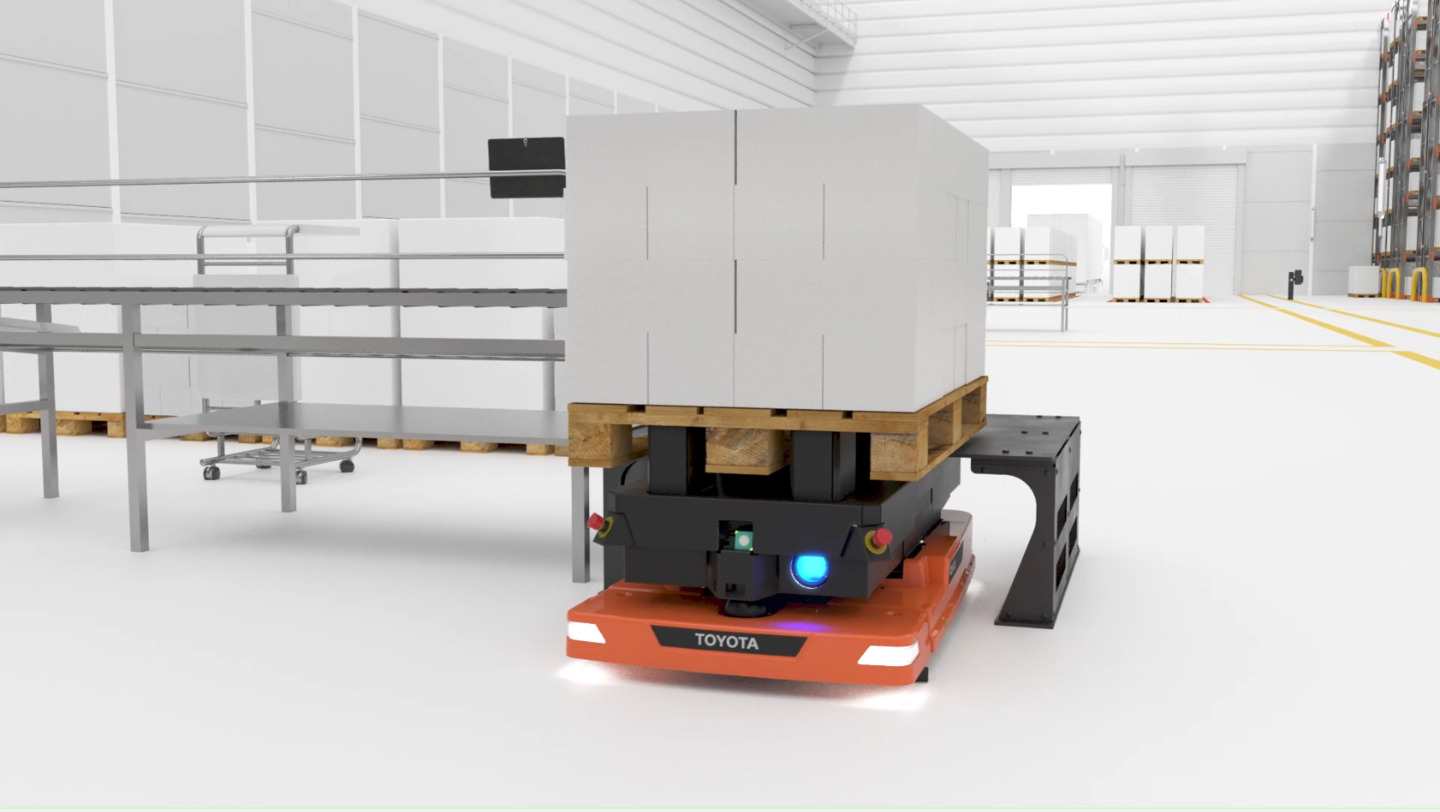
The transition to a fully Smart Industry era begins with understanding Autonomous Guided Vehicle technology such as AGV systems, which play a key role in improving production efficiency, solving labor shortages, and increasing accuracy in logistics operations. Businesses should carefully evaluate which type of machinery best fits their operational needs, while also understanding the difference between AGVs, which follow predefined paths, and AMRs, which navigate autonomously. This enables companies to design warehouse automation systems that align perfectly with industry layouts. Although initial investment costs may be required, the benefits of 24/7 continuous operation, reduced human error, and minimized product damage significantly increase efficiency, helping businesses achieve faster ROI and sustainably transform into a Smart Industry.
Labor shortages, internal logistics delays, and inventory damage caused by operational errors are major challenges that hold back business growth today. Automation technology is no longer just an "option" but a "survival solution" for companies looking to maintain their competitive edge. Today, we will introduce you to AGV innovation—a solution set to transform your warehouse management and production lines into a more efficient system. It reduces human error, increases operational speed, and fully supports the Smart Industry transition, enabling businesses to evolve into a smart and sustainable manufacturing system.
What is an AGV? ?
For those beginning to explore automation technology, a common question is: what is an AGV? The term stands for Automated Guided Vehicle. It refers to an unmanned vehicle designed to transport products, materials, or pallets within a designated facility. It operates using highly accurate navigation systems such as magnetic tape guidance, laser navigation, or QR code tracking on the floor. These technologies enable the vehicle to follow a fixed path precisely and safely without human control. As a result, AGVs significantly improve efficiency, reduce operational errors, and enhance logistics processes in modern smart manufacturing environments.
Getting to know the types of AGVs
To maximize application efficiency, it is important to first understand the different types of AGVs. They are primarily categorized by their lifting mechanisms and how they transport loads:
- Automated Forklifts (AGFs): Commonly referred to as AGFs or the TOYOTA Autopilot series. They look similar to electric forklifts but offer unmanned, semi-automated precision. They are highly ideal for lifting and transporting pallets in racking systems and vertical storage operations, improving safety and reducing human error in warehouses.
- Towing AGVs: Engineered to pull heavy multi-cart trains, allowing them to transport massive volumes of components. They are best suited for horizontal towing from point A to point B in a single trip.
- Unit Load / Platform AGVs: Used to carry loads or workpieces directly on top of the vehicle body. They are highly popular for transferring products station-to-station along a production line and increasing overall manufacturing speed and efficiency.
Deep Dive: What is the difference between an AGV and an AMR?
When exploring warehouse robotics, many people confuse these two technologies. To clearly differentiate between an AGV and an AMR, look at their operational flexibility and routing paths:
- AGVs: Move strictly along a "clearly predefined, fixed path" and cannot deviate on their own. If an AGV encounters an obstacle, it stops and waits until the path is cleared. This exact characteristic makes it a perfect Industrial AGV for environments that prioritize highly organized layouts, clear raw material transport routes, high operational stability, and heavy-duty load handling.
- AMRs (Autonomous Mobile Robots): Feature more flexible navigation systems without the need for physical floor guidance. They can independently calculate routes and avoid obstacles in real time. This makes them suitable for warehouses with frequently changing layouts and is commonly used for light to medium-load transportation, offering greater flexibility in modern logistics operations.
How are AGVs used in industry, and which industries are they suited for?
When deployed in a live facility, the workflow typically starts right at raw material receiving. An Industrial AGV handles the transport of raw materials from storage, delivering them precisely on time to assembly line stations. Once production is complete, the AGV automatically takes finished loads to the warehouse or dispatch staging areas.
Given this exceptional efficiency, you might wonder which industries benefit most from Automated Guided Vehicles. Today, this technology spans several key sectors:
- Automotive Industry: Used to transport heavy spare parts directly into assembly lines.
- Food and Beverage Industry: Reduces human contamination risks and operates continuously in sub-zero cold storage environments.
- Electronics Industry: Delivers the smooth, high-precision handling required to prevent delicate, fragile components from being damaged.
- E-commerce Warehouses: Drives rapid, 24/7 order fulfillment and sorting operations.

Cost-Benefit Analysis: How are AGVs maintained and what is the cost?
When evaluating expenses and preventative maintenance schedules, management teams frequently raise questions regarding how AGVs are maintained and what the cost is. Here is the breakdown:
Maintenance
Although AGV systems require a relatively high initial investment in both vehicles and control software, their maintenance is simple and wear-and-tear is significantly lower than human-operated vehicles. This is because AGVs operate at a constant speed without sudden acceleration or braking, which reduces overall mechanical stress. Key maintenance tasks mainly include cleaning navigation sensors, inspecting drive wheels, and maintaining batteries in ready-to-use condition. As a result, AGVs offer a highly reliable solution for Smart Industry and modern logistics systems, delivering long-term stability and lower operational costs.
Expenses and Return on Investment (ROI)
It is undeniable that an AGV system in a Warehouse requires a relatively high initial investment covering both the vehicles and the fleet control software. However, when balanced against the long-term savings—such as eliminating employee overtime (OT) expenses, running 24/7 operations without breaks, and removing hidden costs from product damage accidents—most businesses reach their breakeven point within just 2 to 3 years, making AGVs a highly cost-effective solution for transitioning toward a New Era.
Investing in automation technology is no longer a matter of the distant future; it is a critical present-day strategy to boost profitability and de-risk your business operations. If you are looking for an AGV system in Warehouse tailored to solve your logistical challenges, let the experts at Toyota Material Handling Thailand be your partner. We are ready to evaluate your facility layout and design the most cost-effective automated system for your business today.
Contact us for a quotation
- Phone : 02-4949-155
- Email : Info@tmhth.toyota-industries.com
References :
- What is an Automated Guided Vehicle?. Retrieved on May 12, 2026, from https://www.toyotaforklift.com/lifts/automated-guided-vehicles
Frequently Asked Questions (FAQs) about AGVs
Q : Do AGVs require on-site human operators to function?
A : No, they do not. AGVs operate as 100% unmanned, automated systems. The vehicles move and execute tasks with absolute precision based on pre-programmed routes and schedules. This minimizes human error and keeps operations running smoothly without relying on manual labor.
Q : If an industry changes its layout frequently, should we use an AGV or an AMR ?
A: If your facility regularly reconfigures its storage areas or material flow paths, an AMR system is a better fit because it independently maps new paths to avoid obstacles. However, if your production lines are fixed and your focus is high stability when handling heavy payloads, an AGV will deliver more precise and dependable performance.
Q : Can AGVs operate in cold storage warehouses ?
A : Yes, they perform exceptionally well. Many AGV models are specifically built to withstand sub-zero conditions. They are highly popular in the food and beverage sectors because they eliminate health and safety risks for workers who would otherwise face prolonged exposure to freezing temperatures.